Linking Civilisational Wellsprings
- By : Anirban Ganguly
- Category : Articles
PM Modi’s address at the SCO Civilisational Dialogue underscores the enduring relevance of ancient intellectual networks in shaping a shared Asian future
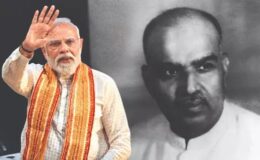
Prime Minister Modi’s address at the SCO Civilisational Dialogue was futuristic. It delineated a practical schema for the way forward and suggested concrete programmes and projects that will impart direction and meaning to the cycle of dialogues.
PM Modi spoke of how our ancestors had enriched people-to-people contact centuries ago. Trade routes and networks also served as highways for spreading ideas and knowledge: “Along these routes travelled not only merchants, but also scholars, travellers, and Buddhist monks. These journeys facilitated the exchange of ideas, languages, and traditions.”
PM Modi referred to Kumarajiva, the 4th-century translator, philosopher and genius. Kumarajiva laid a perennial philosophical foundation for Buddhism in China. His “Life of Asvaghosa” remains one of the fundamental civilisational texts. Born to an Indian father – a great scholar, Kumarayana – and a Kuchean mother, Kumarajiva was educated in Kashmir in “India in Buddhist doctrines and literature”, becoming one of the legends of the ancient world.
Like Kumarajiva, three other names, all Buddhist Acharyas, come to mind as giant transmitters of civilisational knowledge and traditions: Bodhidharma (5th century), one of the greatest influences on China and East Asia; Padmasambhava (Guru Rinpoche) (8th century), who exerted a transformative influence on India, Tibet, China and the entire Himalayan world; and Atisa Dipankara Srijnana (11th century). All three were born in Bharat: Padmasambhava in Kashmir, Bodhidharma in south India, some say in Kanchipuram, and Atisa in Bengal.
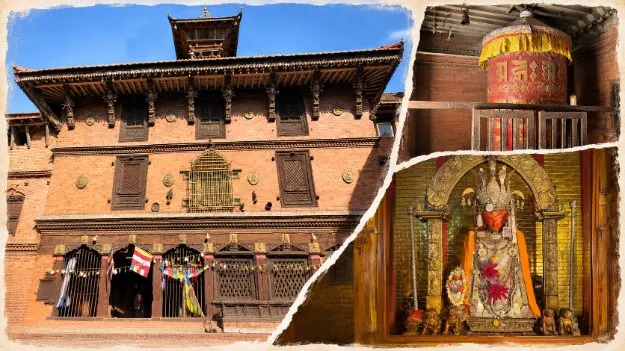
One of the greatest Buddhist Acharyas in civilisational history, Atisa Dipankara Srijnana (982–1054), was born in Bengal and passed away in Tibet. In search of his traces and footsteps, on the sidelines of a Bharat-Nepal Policy Dialogue organised by the Kathmandu-based Neeti Anusandhan Prastishthan, Nepal, I visited Bhaktapur in the Kathmandu Valley, the centre of Newari culture and tradition, once the capital of Nepal under the Malla dynasty.
Venerable Nigrodha Mahasthavir, head of the Viswa Shanti Vihara in Kathmandu and a proud raconteur of Atisa’s association with Nepal, put me on the trail. Bhikshu Nigrodha spoke of the “Atisa Vihara” that stands in the very area where Atisa stayed before proceeding to Tibet.
Our host was Ratna Sundar Shakya, an eminent Buddhist writer, historian and translator in Bhaktapur. The affable Shakya possesses encyclopaedic knowledge of the region, especially its Buddhist connections. It was an immersive experience as our discussion meandered through the lanes of Bhaktapur’s lore and history, with the snow-clad Himalayas as the backdrop. We exchanged notes, dates, episodes and books.
Shakya has written extensively on Mahapandit Rahul Sankrityayan, who visited Bhaktapur about seven times and stayed there before proceeding to Tibet, trekking for over a month. The road to Tibet passes behind the iconic Vishnu Mandir atop Changu Hill, Changu Narayan, said to be the oldest Hindu temple in Nepal. “The road lies over there,” Shakya said, pointing at the snowy Himalayan range.
He also narrated why Nepal was grateful to Sir Asutosh Mookerjee for preserving its Buddhist history and language. The legendary Nepal Bhasa proponent, thinker, activist and Buddhist scholar Dharmaditya Dharmacharya – Jagat Man Vaidya (1902–1963) – was awarded a scholarship by Asutosh Mookerjee to study at Calcutta University. His encounters and interactions with Asutosh, who had introduced Nepal Bhasa at Calcutta University, led Vaidya to complete a master’s degree in Pali and sparked in him a lifelong passion for Nepal Bhasa and Buddhism. Jagat Man Vaidya is considered to be a pillar of the Nepal Bhasa renaissance.
We visited the “Dipankara Vihara”, a quaint Vihara built in the 16th century and dedicated to Atisa Dipankara, who stayed here for a year on his way from Vikramasila to Tibet via Nepal. Atisa went to Tibet at the invitation of the king to revive, restore and reinstate Buddhism there. The Vihara has shrines dedicated to Ganesha and Shiva-Parvati, where worship is offered daily.
In his famous essay, “Life of Acharya Dipankara Srijnana”, Rahul Sankrityayan writes: “After having crossed the boundary of India, he entered Nepal, and in a few days reached the capital of Nepal. The king (Ananta-Kirti) welcomed him with great respect, and made him a royal guest. He urged him to stay in Nepal so vehemently that he was not able to leave Nepal for one year… From Nepal he proceeded towards his destination…” (Buddhist Annual, 1932).
Atisa was accorded a grand welcome when he entered Tibet. Sankrityayan writes: “In welcoming him the king’s representatives expressed their feelings thus: ‘O greatest Indian Teacher, your coming to our country is not less than the coming of a God. We shall remain ever thankful to you for this act of compassion…’”
Atisa was 60 when he went to Tibet and lived and preached in all parts of the country for about 15 years, translating many works from Sanskrit into Tibetan. One of his most famous works, “Bodhipathapradipa”, was written in Tibet. Atisa died in the Nyethang monastery (Tibet), where his ashes are preserved.
Historian of civilisations D.P. Singhal writes: “Atisa based his teachings on the Yogacara tradition, took a synthetic view of Hinayana and Mahayana Buddhism… He was possibly the last great Indian scholar to carry spiritual impetus from India to Tibet, where he ranks next only to the Buddha and Padmasambhava…” (India and World Civilisation, 1993).
One of the finest scholars on Atisa, Alaka Chattopadhyay, writes that his “importance in the religious history of India and Tibet is clear and unmistakable. He was in fact a landmark in both – being about the last of the great Buddhist acaryas in India… He is remembered in Tibetan tradition itself as by far the greatest of the teacher-reformers of Tibet. From this follows also his stature in the world-history of Buddhism.” (Atisa and Tibet, 1967).
The visit to the Dipankara Vihara was an enriching and contemplative search for defining episodes in Bharat’s civilisational history and march.
In fostering a dialogue of civilisations and realising the aspirations of an Asian Century, centres such as these possess immense significance. PM Modi’s mention of Kumarajiva is, thus, a deeply symbolic call to renew and re-link these civilisational wellsprings.