THE REDISCOVERY OF A NATIONAL ICON
- By : Anirban Ganguly
- Category : Articles
Had Sardar Vallabhbhai Patel lived longer, he would have resolved many issues that continue to trouble the country even decades after independence
Like October, this December too saw a renewed debate and discussion on the life and legacy of Sardar Vallabhbhai Patel. Such a debate augurs well for our public life; it demonstrates a growing aspiration for breaking out of a mould and to begin rediscovering new heroes, new icons and newer ideas of India.
In many ways, Sardar Patel’s legacy continues to inspire and to serve as a model for a people yearning for a decisive leadership, an articulation of distinct national goals and a display of vigour in policy direction and implementation. In his brief tenure, Sardar Patel displayed all of these traits, and perhaps, therefore, ever since his death, and at times of grave national crisis or challenge, people have felt his absence or have referred to his style and vision of leadership. During the 1962 Chinese attack, both S Radhakrishnan and C Rajagopalachari had exclaimed, “How we wish the Sardar were alive today!” Such a feeling also permeated other sections, especially those who had worked with Sardar Patel during the crucial years following independence. VP Menon, his shadow in the Ministry of States, once observed in a similar vein, “If the Sardar had been alive he would have steered us clear of many of the pitfalls we have fallen into since his death.”
It was Sardar Patel’s qualities of leadership that endeared him to the masses. Never did he seem to prevaricate, obfuscate or dodge. His clarity of the national goals as unity and strength, a strong centre, a well-equipped modern Army, economic contentment and stability, a disciplined and responsible citizenship and a firm administrative fabric was what was needed to instill confidence in a fledgling republic struggling on many fronts. It stood in stark contrast to the Nehruvian approach, which was deficient in pragmatism and sorely lacked assertiveness.
Referring to the Sardar’s qualities of leadership, Rajendra Prasad had aptly remarked that he “was not an ideologist or theoretician” but above all “a practical politician and a successful administrator”, who “left landmarks in our history which should not be forgotten”. Prasad movingly wrote of Sadar Patel’s lasting contribution to our national life, “”that there is today an India to think and talk about is very largely due to Sardar Patel’s statesmanship and firm administration”. And “yet”, rued Prasad, “we are apt to ignore him”. Writing this less than nine years after Patel’s death in December, 1950, Prasad noted how “we have almost completely forgotten Sardar Patel”. The creeping Nehruvian consensus brooked no alternate approaches.
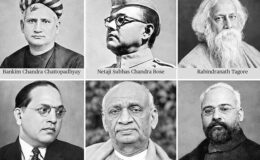
The other quality of leadership that struck all those who closely worked with Sardar Patel was his remarkable ability to create consensus and to lay bridges. One of his close associates recalled how, even though he was a strong party man, he could “in the wider interest of the country secure the cooperation of other elements in the national life.” It was on his advice that BR Ambedkar and Syama Prasad Mookerjee, both lifelong opponents of the Congress, were inducted in the first Union Cabinet. Patel wished to enlist their expertise and commitment in the task of national reconstruction.
On his capacity to take tough decisions and get it accepted across the board, Sardar Patel’s daughter, Maniben, commented that he could do it because “he had no axe to grind” and “was not amenable to threats or blackmail”. One of his leading biographers observed that he did not employ power to “generate money, jewellery or property to himself or his offspring”. For him, power was meant to actualise and sustain the grand edifice of our national life. The present and ongoing effort, therefore, to rediscover Sardar Patel in our national quest and to accord him a place of honour and to derive from his example a guiding light, is a legitimate attempt that confirms to the aspirations of the people of India.