Macaulay Acolytes Halting Transition of Our Heritage
- By : Anirban Ganguly
- Category : Articles
In his A History of Civilisations, a classic study of the origins and evolutions of civilisations, legendary French historian Fernand Braudel (1902-1985) came up, among other things, with a simple and yet perceptive description of civilisation. “A civilisation”, he wrote, “can be approached, only in the long term, taking hold of a constantly unwinding thread—something that a group of people have conserved and passed on as their most precious heritage from generation to generation, throughout and despite storms and tumults of history.” It is this active preservation and passing on that keeps lighted aspirations for greatness in a people and civilisation.
This effort at conserving “their most precious heritage”, in the Indian context suffered repeatedly but faced one of its toughest challenges during the British colonial phase and after that, ironically, post independence. The challenge of de-nationalisation or de-culturisation during the colonial or Maucaulayean phase and its resistance by some of our most avant-garde thought leaders who ensured that some of that “precious heritage is preserved, defended and re-articulated in a modern idiom and context” is best described by that intrepid ideological anchor, late Sita Ram Goel. About the English system of education, as introduced in India, Goel noted that it aimed at “promoting and patronising a new Indian upper class who, in turn, would hail the blessings of the British Raj and cooperate in securing its stability in India.”
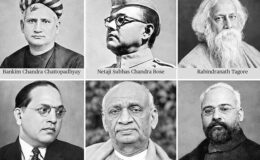
The predominance and hegemony of the Macaulayean system swept off many future leaders. It gave rise to a headstrong and intellectually captive breed of opinion-makers and directors of India’s destiny, who were disconnected and divorced from her civilisational ethos, her aspirations, and from the moorings of her spiritual culture and its essential and perennial messages that had once attracted almost the entire thinking world to her doorstep. Despite this intellectual hegemony, India’s “most precious heritage” survived to a great extent because, epoch leaders like Bankim Chandra Chatterjee, Swami Vivekananda, Sri Aurobindo, Lokmanya Tilak, Subramaniam Bharati, Ananda Coomaraswamy, Mahamana Madan Mohan Malaviya, Veer Savarkar, M S Golwalkar, Pandit Deendayal Upadhyaya, to name a few among a select pantheon, succeeded in escaping “its magic spell” and in rediscovering “their roots”. They were, as Goel argued, “great souls, strong enough to survive the heavy dose of a deliberate denationalisation.”
Unfortunately, post Independence, Indian education, cultural planning and action, and the over-all Indian societal ambience and direction failed to ensure that this “most cherished heritage” hardly ever got opportunities to express its many dimensions or direct the course of our national life—both in the field of policy, education and culture. The Nehruvian establishment also created a narrative that was neglectful or lethargic towards the vision and articulations of these epochal thought leaders. Such a reductionist approach compounded with the hatred for Indian culture perpetrated by Communists and their suppression of these leaders prevented the growth, in Sri Aurobindo’s words, “of a large and noble political ideal”—it killed all aspiration for greatness.
That reductionism is now being reversed and Sri Aurobindo’s words flow across the decades to inspire: “Low-pitched and narrow ideals, small hopes and aims, petty caution and cowardice as well as short-sighted and faint-hearted leadership—all these paltry things can never be the right material for building the strength of a nation.” Our politicians, reminded Sri Aurobindo, “should always keep in mind the saying from the Mahabharata: niriho nasnute mahat, the unaspiring shall never enjoy greatness.
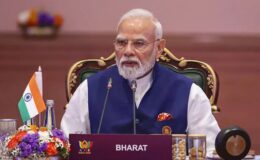
While Narendra Modi works and aspires towards that civilisational greatness for India, some unaspiring present day Macaulay acolytes ceaselessly work to halt it. They refuse to recognise and project India’s “most precious heritage passed on from generation to generation”.