Unaware of reality, communists see politics behind triple talaq
- By : Anirban Ganguly
- Category : Articles

When asked what advice would he give the Left-wing writers, leading British conservative philosopher and writer Roger Scruton replied “acknowledge the legitimacy of disagreement”. Scruton’s description of the Left and Communist intelligentsia, and his analysis of their methods of political and intellectual impositions are applicable in the Indian context as well. It is the essential refusal of theirs to acknowledge the right to disagree—in the political and intellectual sphere that has vitiated India’s political atmosphere since many decades.
Unable to generate any new thinking, incapable of political expansion or of self-renewal and having failed to ideologically evolve and restate themselves, the Left in India is not only stagnating but increasingly taking recourse to intellectual and political thuggery and charlatanism. Their counterparts in the West also work in close coordination and disrupt, hiss and boo anyone who has an alternate view-point or espouses a world view which is not in consonance or opposed to theirs. They refuse to seriously engage in an argument or in articulating counter-points, as Scruton observes, “People on the left don’t, on the whole, engage with their opponents. They dismiss and sneer at them, and, if they can, they will accuse them of things like racism or whatever the evil of the day might be.” It is always a concocted and conjured evil that these come up with it, so that they can continue with perpetuating their false positions.
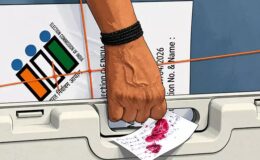
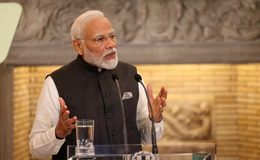
The other obsession that the Left has is to politicise and to think that ‘everything is political’. The latest expression of this reductionist mindset is reflected in Sitaram Yechury’s observation on PM Narendra Modi’s repeated appeal to not politicise the triple talaq discussion. Modi had called for a serious and dispassionate discussion on the issue. In his meeting with leading maulanas on May 9, he appealed to them to see the issue in terms of ending discrimination against women, and asked them to initiate this reform from within their society and desist from seeing it in political terms.
The response to Modi’s appeal on the issue has been heartening and is coming in from across the country, especially from the community to which his appeal is addressed. While a positive atmosphere of debate and discussion is being generated across a cross-section, the communists, under direction from the puny leadership, are seeing politics and communal angle in it. Sans seriously engaging, they are displaying how out of tune they have become with the realities of India and with the dimensions of her collective thought.
Their receiving a microscopic and disgustingly paltry share of votes in recent Delhi civic polls has not shaken them out of their intellectual arrogance-induced stupor. Scruton explains it best, “People on the left think that everything (sic) is political. Even if you are discussing the foundations of arithmetic they will look for the hidden political agenda. Every question and every answer, when you are fully immersed in the left-wing way of thinking, is part of a political posture. Indeed, to suppose that there are purely impartial and objective questions is itself to be guilty of ‘right-wing’ deviationism. Against that way of arguing you cannot possibly win, and that, I came to realise, is its point.”
This refusal to ‘acknowledge the legitimacy of disagreement’, both politically and intellectually, is seen latest in the intellectual intolerance displayed against Professor Makarand Paranjape who is on a lecture of the West and politically seen in the manner in which veteran BJP leader and MLA O Rajagopal in Kerala was attacked and scores of BJP and RSS workers killed by leftist cadres.