India Should Take Lead in Cultural Arena of the World
- By : Anirban Ganguly
- Category : Articles
When India’s “Parrot Lady” of 12th century vintage accompanied the PM back from his state visit to Canada, it was deeply symbolic of a civilisational state reclaiming her cultural-civilisational footprints and space. It was profoundly symbolic of India— after centuries of cultural marginalisation—finally stirring to recognise her civilisational-self and to reclaim its contours and expressions. Similarly when the visiting Australian PM, in September 2014, handed the 11th century Shiva and Ardhanariswara to his Indian counterpart, it was a symbolic recognition of the aspirations of a rising civilisational state which actively seeks to reconfigure her rightful cultural symbols and space.
When PM Narendra Modi visited the battle-field memorial at Neuve-Chappelle in France, becoming the first Indian PM to pay homage and recognise, on behalf of an entire nation, the valour and sacrifice of Indian soldiers —who, even while fighting another’s battle, showed exemplary valiance—fallen on a foreign land and saluted them for their “loyalty, courage and sacrifice”, it was symbolic of that civilisational reclaiming as was his visit to the Komagata Maru museum in Vancouver.
During his Mauritius trip in March, Modi visited the ‘Apravasi Ghat’ and paid tribute to the brave “Apravasis who left India’s shores nearly two centuries ago”. His visit symbolised the recognition of India beyond India’s physical borders—it was a reaching out to and re-creating of a civilisational India. Such a pro-active infusing of the civilisational dimension in foreign policy has been visible ever since the PM’s first major bilateral foray to Japan where he visited two of the most sacred Buddhist temples—Toji and Kinkakuji—and meditated to re-ignite a civilisational link between the two ancient lands and people.
Paying homage, displaying an active recognition of the sacrifices made by one’s citizens in the past, especially in foreign lands, actively seeking to retrieve the physical symbols of our high cultural achievements, pro-actively bonding with the diaspora and infusing and reactivating in them the sense of a civilisational connect have been the hallmarks of a restated foreign policy under the new dispensation in the last one year. Apart from a dynamic emphasis on the commercial and technical, the new and fresh emphasis on the cultural-civilisational can never be missed.
Interestingly, it was perhaps for the first time that a foreign policy resolution of a political party talked of seriously developing and of having begun the process of evolving “cultural and civilisational linkages—Sanskriti evam Sabhyata”, this active aspiration to re-invent and re-state these cultural and civilisational linkages
have been increasingly visible of late. Even the hard action of boldly and successfully evacuating distressed Indian citizens from the war zones of Yemen and Iraq, of wading deep into conflict zones on the strength of our civilisational moorings and conviction, is reflective of the first yearnings to play an increasingly active role on the world stage.
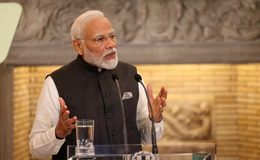
When Modi visited the headquarters of the UNESCO in Paris and spoke at length there on India’s contribution to humanity’s cultural preservation and evolution, it was again symbolic of India’s aspiration for playing a greater role in the cultural arena of the world. When he bowed down before the statue of Sri Aurobindo in UNESCO and referring to his epochal contribution to human evolution spoke of the need to preserve “national freedom, diversity of civilisations and autonomy of culture”, he was essentially reiterating India’s timeless civilisational message as articulated through the sage’s own life and works.
India’s recognition of the civilisational dimension in her external dealings has been one of the most profound shifts in recent times, accelerating the rise of a civilisational state.